
Ever Wondered How the Game of Darts Began? The Answer Might Surprise You
Have you ever wondered how the game of darts began? If the answer’s yes – great, you’re in the right place. If the answer’s no, then prepare to be lightly reprimanded and pleasantly enlightened.
More than meets the (bull’s) eye, the game of darts is not merely a pub game, but a piece of sporting history. And its origins may surprise you.
Step back in darting time and get ready to be enthralled by tales of medieval soldiers, wine barrels, Big Foot, and one very important court case that changed the shape of pub nights and Sunday sports channels forever…
As well as the history of darts, we’ll also treat you to some fascinating tips and tricks of the game so you can wow your fellow dart fans with not just your keen aim, but your unbridled knowledge too.
Quick answer: where did darts come from?
Darts most likely evolved over time from military and pub-style target games, gradually becoming the organised sport we know today.
A major milestone was the 1908 Leeds court case, which helped establish darts as a game of skill rather than chance. From there, rules became more consistent and competitive darts grew into a global phenomenon.
What you’ll learn in this guide
- The history of darts (from early origins to organised competition)
- The 1908 court case that helped darts thrive in pubs
- How 501 works (including the “double-out” finish)
- Dartboard scoring explained in plain English
- Why Lakeside is such a big deal in darts history
History of Darts
Everyone, at some point, has likely thrown a dart. Whether you’re a dab hand or just squint and hope for the best, it’s a game you’ve probably encountered at some stage and with varying degrees of success. But aside from Bob down the local, where did the concept of darts actually come from? And where did it start?
Where was darts invented? Soldiers to fléchettes
The answer to where darting began is often traced back to medieval times, with popular accounts linking it to soldiers and target practice: shortened spears, arrow tips, or similar projectiles thrown at wooden targets to pass the time and sharpen aim.
In many retellings, those targets included things like barrel ends and later tree trunk segments—and it’s within the natural patterns of tree rings that people often say the dartboard design was born.
Fast forward a few centuries to the 1800s and the French had put a name to the darts they threw: fléchettes (often translated as “small arrows”).
A ‘grand’ hit on both sides of the Channel, these little winged wonders (and similar pub-style target games) helped shape what would become modern darts, with different regions adopting their own different styles of play.
The court case (Leeds, 1908): skill vs luck
All was going well until 1908, when a Leeds pub landlord, Jim (James) Garside, was pulled into court because darts in his pub was treated like illegal gaming. The problem? The Law viewed certain pub games as gambling if they were based on luck. So, it fell to Jim to prove that darts was, in fact, a game of skill, not luck.
Fortunately, he knew just the chap to help him persuade the powers that be: William ‘Big Foot’ Annakin. As well as big socks, ol’ Big Foot also had a big aim, and he wowed the court with his dart throwing talents—helping demonstrate that good darts isn’t random. Thanks, Bill!
Why this matters: That story (and its legal ripple effects) is one reason darts became widely accepted as a proper pub game rather than “just gambling in disguise.”
Darts today: from pub favourite to televised sport
After Big Foot’s performance in the court, the foundations were cemented for the game of darts in British culture. In 1925, the National Darts Association was created, and rules became more standardised.
However, it wasn’t all plain sailing and, following a huge rise in popularity, a handful of regional bans came into place due to the unbecoming behaviour the game reportedly encouraged (largely related to inebriation!).
Fortunately, wrongs were righted, the bans were lifted, and today the game of darts remains as beloved as ever.
And then there’s Lakeside…
The “Home of World Darts” at Lakeside (Frimley Green, Surrey) holds a special place in darts history. Lakeside hosted the BDO World Darts Championship from 1986 to 2019, and the WDF World Darts Championship has been held at Lakeside since 2022—which is exactly why it’s still such a pilgrimage venue for darts fans.
How Do You Win at Darts?

When it comes to standard darts, each player begins the game with a score of 501. From the first throw, the aim is simply to achieve a score of exactly 0 before the other player, with the final throw needing to land on a double (this is the classic “double-out” rule).
In many formats, the bull can also be used to finish because it sits in the double ring (outer bull 25; inner bull 50). This requires solid strategy, a steady throw, and a decent head for maths!
Players take turns throwing darts and compete to win the leg (one game) and ultimately the set (multiple games).
In professional tournaments, experienced players will often adopt a particular throwing sequence or strategy that works for them. To emulate the big players and win at darts, you must master a balanced stance and consistent throwing technique, as well as develop strategies to help you remain focused under pressure. Above all, practice is essential for polished play and building muscle memory and clear focus.
The rules of darts (501, explained simply)
Depending on the game, there are different rules to different versions of darts. However, the standard 501 rules are widely recognised.
In 501:
- Two players start on 501
- Each takes turns throwing three darts
- You subtract what you score from your total
- First to reach exactly 0 wins the leg
- Final dart must land on a double (and in many games, a bull finish is also allowed)
- Bust rule (the classic sting in the tail):
- Missed throws can lead to scores going bust; for example, accidentally reducing the score to 1, or taking a score below 0. When you bust, the turn doesn’t count and your score resets to what it was at the start of that visit.
As well as standard 501 darts, other popular formats include 301 (same premise), and Cricket (which involves “closing” specific numbers).
Dartboard scoring system (how the board actually works)
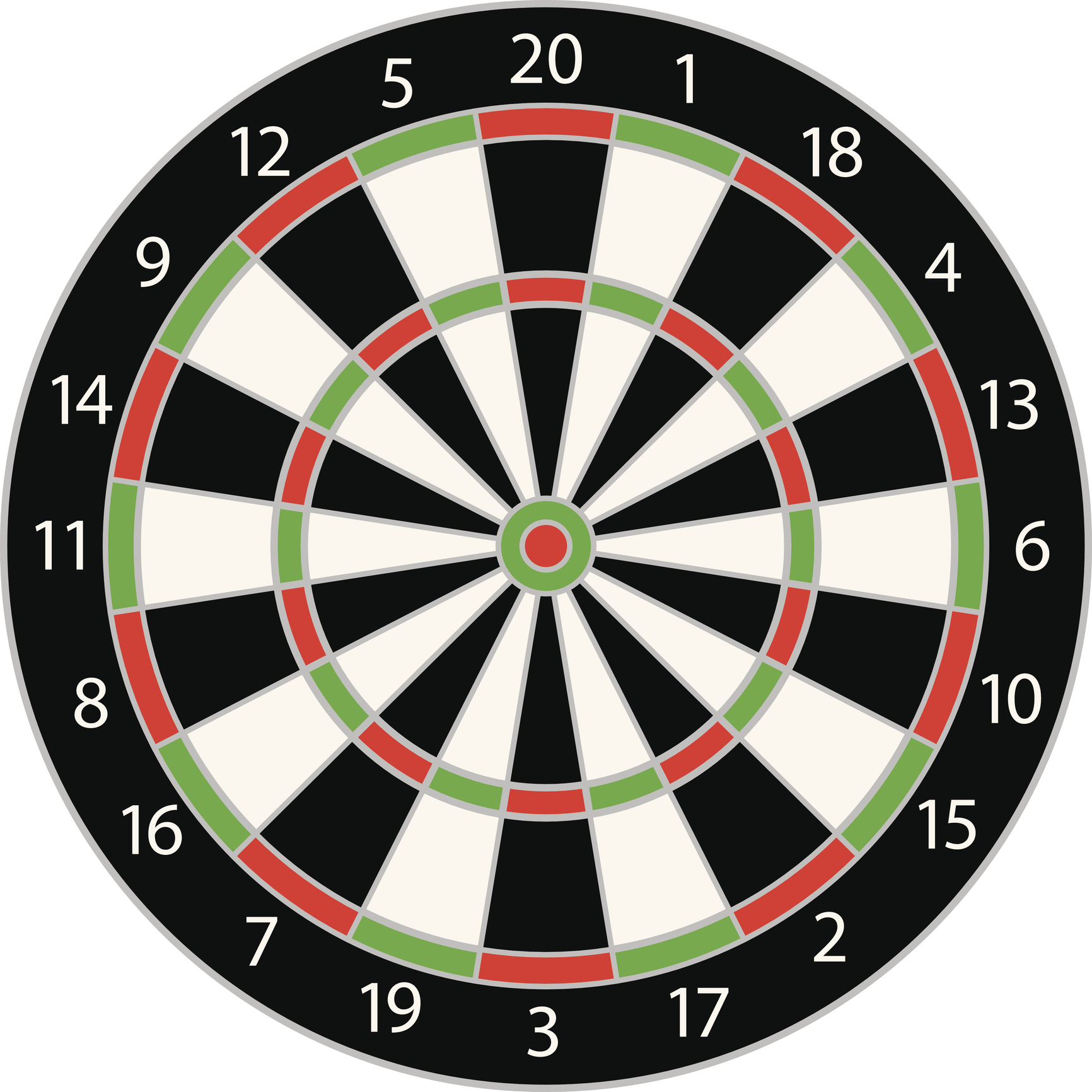
The standard dartboard scoring system includes numbered sections:
- White and black wedges (scoring 1–20)
- Outer red and green rings (scoring double 1–20)
- Inner red and green rings (scoring triple 1–20)
- Outer bullseye (scoring 25)
- Inner bullseye (scoring 50)
- If you’re really bad, it also includes the surrounding wall and floor, but you don’t get any points for those.
As you throw, the section of the board that you land on determines how many points get taken away from your starting score (501). Naturally, the higher the score you throw, the more that gets taken off your score and the quicker you get to 0.
However, it’s important to make sure that, on your last throw, you can get to 0 with a double (or a bull finish, depending on the rules you’re playing). And if you can’t? You’re bust.
Ready to see darts history come alive? Book your stay at Lakeside
So, we’ve convinced you how much fun darts is. Ready to see it in action? Taking pride of place in our own piece of darting history, Lakeside (Frimley Green, Surrey) has hosted some of the world’s very best players for decades—most famously through the BDO World Championship era and now with the WDF World Darts Championship.
Our annual championship events make for the ultimate pilgrimage to soak up the spectacle. And we’ve got wonderful rooms for you to retreat to afterwards, too.
In 2026, we'll be hosting the darts from Friday 27th November - Sunday 6th December. Be sure to book well in advance to avoid any disappointment.